


HAND BRUSH T
Painted brush strokes.
Empty white spaces.
And a handcrafted harmony – between clay and textile.
HAND BRUSH T is a new collection by HaaT, its essence shaped by dynamic sweeps of brush strokes, hand-painted across the textile surfaces by specialist artisans in Kyoto. Inspired by the layered depth of ceramic glazes, a series of T-shirts mixes a raw edge with the timeless touch of hand craftsmanship, with every item unique in atmosphere.
Bold monochrome strokes – in white-flecked shades of black, red or navy – cover the clothing, with the areas along the side seams intentionally left undyed, the empty spaces evoking a quiet sense of balance.
The story begins with the textile. This series is brought to life using a high-quality fabric spun from raw cotton grown in California's San Joaquin Valley, using water that originates as snowmelt in the Sierra Nevada mountains.
With its long and uniform fibers, the cotton is famously soft and smooth to the touch. Twisted yarns enhance a sense of weightlessness – resulting in clothing which feels light and fresh, gentle and breathable.
And then the dyeing begins. The sewn garments – made in two different T-shirt styles – are carefully laid out on newspapers, one by one, at the Kyoto factory. Artisans then use wide brushes to mindfully paint on the dye. Each stroke moves freely across the pure white cotton, allowing subtle variations in tone, texture and form to emerge. The fabric surfaces quickly transform from pristine white to rough-edged sweeps of deep jewel-tone reds, blacks or blues. The brushed color is flecked with white, like foam-tipped waves, adding further textural depth.

The white undyed edges along the side seams further sharpen the visual contrast – while also bringing an innate sense of harmony to each painted piece. The end result? Every item of clothing is rooted in its own unique atmosphere – shaped by the movement of the artisan’s hands in that moment.
Color. Depth. Space. Lightness. HAND BRUSH T brings these elements together to shape a uniquely expressive T-shirt collection – mirroring the beauty of ceramic surfaces.
KYO CHIJIMI ITAJIME

Picture a white circle.
Small, curved, softly egg-shaped. And repeat.
The new KYO CHIJIMI ITAJIME series by HaaT was brought to life by expert artisans specializing in a centuries-old dyeing Japanese technique.
Shaped by human hands and a quiet textural rhythm, the series gently balances traditional craftsmanship with timeless contemporary abstractions. Textile surfaces are scattered with countless white ovoid forms, edges softly blurring into the surrounding shades, evoking an organic sense of beauty.
The end result? A series of clothing (top, polo shirt, pants, skirt, dress) in gray, pink and blue, blocks of color punctuated by white circular abstractions – each piece timeless in atmosphere, one-of-a-kind and joyfully imperfect.
It all begins with the textile. The clothing is first sewn using Kyo chijimi – a material crafted by artisans, defined by its signature fine crinkles and sense of airy lightness, making it perfect to wear in summer heat and humidity. Next, dyeing takes center stage – in particular a specialist resist-dyeing technique known as itajime, which has been used for centuries on kimono textiles.


For KYO CHIJIMI ITAJIME, artisans begin the color journey by first creating small wooden boards in the form of a soft circle. The clothing is folded with origami-esque precision. The positioning of the boards is marked on textile surfaces. And master artisans – using a finely honed balance of strength and meticulous attention to detail – fasten wooden boards onto both sides of the material with metal clamps.
Experts specializing in the coloring process then take over: first washing the entire garment, complete with clamps firmly in place. After calculating the exact tonal mixes, the length of time and temperature of the wash, the clothing is then dyed. The next step is drying the clothing in a special area of the factory before artisans carefully remove the individual metal clamps – and the series takes shape. The layered process behind KYO CHIJIMI ITAJIME is a crafted journey, leading to textile surfaces that are rhythmic and abstract, irregular and uneven – and deeply imbued with a unique sense of organic beauty, rooted in the human touch.


KUMOSHIBORI

Arimatsu-shibori is the general term for the cotton shibori (tie-dyeing) conducted in the Arimatsu-cho and Narumi-cho areas of Nagoya City, Aichi Prefecture. It began and flourished in the early Edo period (1603-1867), when shibori hand towels and other such items were sold as souvenirs to travelers on the Tokaido Highway. Since then, Arimatsu-shibori has been mass-produced in more than 100 different types of shibori patterns using various methods such as tying, sewing, and binding the cloth. Kumo-shibori, one of these patterns, is known as the most common tie-dye design.
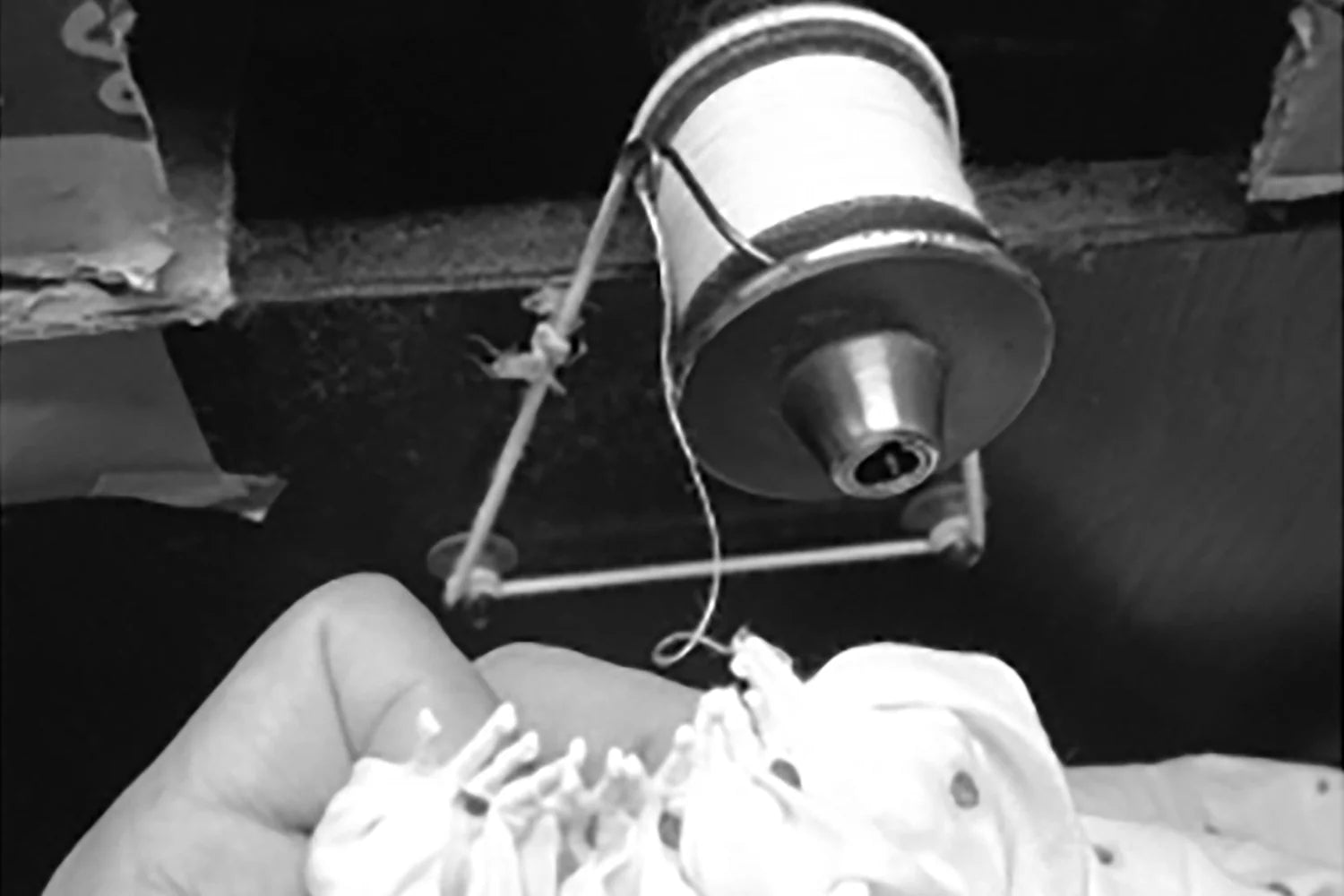
For Kumo-shibori, part of the cloth is tied by hand and dyed. After dyeing, the tied part is untied and a spiderweb pattern is revealed (kumo means spider in Japanese ). However, HaaT focuses on the shibori in its tied state, and aims to make the beautiful, organic form of the shibori be remembered in the garments. Created based on this aim, the KUMOSHIBORI series applies the shape-memory property of polyester and incorporates the bumps of the shibori into the design.
KUMOSHIBORI has now become a staple HaaT series. We have continued to use the small Kumo-shibori bumps to add charming decoration to the neck areas and hems of clothing.
